
Playing a new Russian roulette: what's behind Navalnaya's appeal
01 Dec 2025
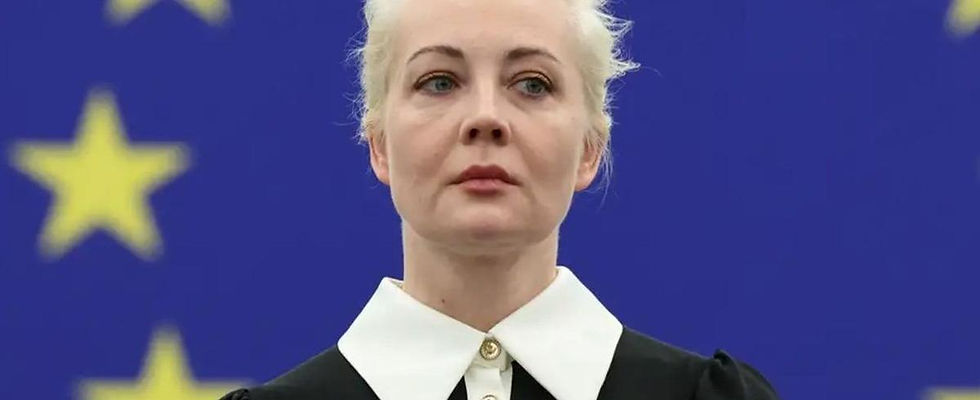
Yulia Navalnaya, photo from open sources
Recently, Yulia Navalnaya, claiming to be the new face of the Russian opposition, recorded an appeal to Russians to write her letters¹. The initiative is, to put it mildly, unusual. Usually, it happens the other way around: those who have left and are living in relative safety express support for those remaining in the country at risk. Here, however, people from unsafe and virtually totalitarian environments are being asked to send messages to someone in Europe, where uniformed men won't come for you at six in the morning for such words.
This seems especially odd given the already major data leak related to FBK projects². In the spring of 2021, the email database from the "Free Navalny!" website, which collected the contacts of supporters ready to participate in protests, was leaked online, and contacts began receiving threatening emails en masse. The FBK acknowledged the leak and blamed it on a former employee³ who denied it⁴. But if human error was present in this leak, it could prove a weak link in the organization again.
Why Yulia Navalnaya needs these letters is clear. Her political image is built on a demonstrative "strong connection to Russia." For internal competition within the émigré opposition, for negotiations with sponsors, and for the upcoming presidential campaign, such a connection is critically important. Even symbolic.
But the question remains, which for some reason no one is discussing again: what will happen to the people who, in a burst of hope, actually write? Politicians traditionally view the electorate as a resource. The risks—technical, legal, and human—remain the personal problem of those who trusted them.
Most Russians have a poor understanding of digital security, and it's not their fault. In a country where intelligence agencies monitor a significant portion of communications, it's impossible to guarantee complete anonymity⁵. But the main question remains unanswered: has Navalnaya's team truly managed to build a security system that can withstand the current risks in authoritarian Russia? To date, there is neither a transparent explanation nor confirmed guarantees that the data of those who sent the letters will be protected from possible third-party access.
And there arises the feeling of an unspoken but clearly unequal exchange: Navalnaya receives symbolic confirmation of her "connection with the electorate within Russia," necessary for strengthening her position with external partners; Russian security forces receive a convenient tool for gauging opposition sentiment and expanding their lists; while ordinary Russians face new potential risks. Ultimately, this exchange suits everyone except those who seriously responded to the call to "renew contact" with the opposition abroad and sent the letter. Their hope for support from the few who share their anti-Putin views turns not into solidarity, but into additional vulnerability.
And this is the main problem. We're once again returning to the familiar gap between the policies of the exiled opposition and the real Russia. The opposition continues to seek confirmation of its relevance, but their tools and methods increasingly shift the risk onto those already living under pressure. The vicious circle persists because it's convenient for everyone except those who remain inside the country and continue to pay the heaviest price.
1. https://yulianavalnaya.com/news/navalnaya-letter
3. https://youtu.be/JeB2mDsK19k
4. https://meduza.io/feature/2021/05/31/konechno-nepriyatno-no-ya-eto-perezhivu